
How to Write a Personal Message in a Success Card for Your Child in Kenya

The night before my son’s KCPE exams, I sat at the dining table with a blank success card and a pen. You’d think I was the one about to sit the paper. My mind was racing; What do I write that’s short, sweet, and still reminds him he’s my little superstar?
It’s funny how a simple piece of card can feel like such a big responsibility. In Kenya, sending a success card isn’t just about “Good luck in your exams.” It’s about cheering them on in a way that sticks with them, even when they’re deep in an exam hall staring at a tricky math question.
But here’s the thing, many parents (and aunties, uncles, siblings…) end up writing messages that sound the same as everyone else’s. You want yours to feel personal, something your child or sibling will read, smile at, and maybe even keep for years.
Why a Personal Message Matters More Than You Think
Before we dive into tips, here’s the secret: your child doesn’t just want to hear that you believe in them, they want to feel it. That’s what makes a message memorable.
A personal success card message:
- Reminds them who’s in their corner (even when you’re not in the exam hall)
- Boosts confidence by pointing out their unique strengths
- Gives a calming effect before the big day
- Becomes a keepsake they might read again years later
Think of it like packing them a mental snack for the exam journey, something sweet, nourishing, and uniquely from you. Forget complicated quotes, your child wants your voice.
Tips for Writing the Perfect Success Card Message
Struggling to find the right words for your child’s success card? Discover heartfelt tips, examples, and success message ideas for writing the perfect success card message that inspires and encourages.
Table of Contents
1. Start with Their Name, But Make It Sweet
Don’t just write “Dear Candidate”. Use their name, or even their nickname, to make it instantly personal. Don’t just write, “Dear Brian.” This is your child, not the HR manager at your old job. Add a little warmth:
- “My bright star, Kiptoo…”
- “Dear Amani, my little genius…”
- “To my favourite candidate in the whole wide world…”
Using their name this way makes them smile before they even read the real message.
2. Continue with Warmth, Not Worry
Your child is about to face an important milestone. This is not the time to list all the consequences of failure (“Remember, you can’t be a doctor if you fail biology…”). Instead, open with love.
Example: “Dear Achieng, my bright star, I’m so proud of how far you’ve come. You’ve worked hard, and I believe in you completely.”
Warmth reassures. Worry distracts.
3. Mention a Real Memory
Yes, exams matter, but so does every small victory they’ve had along the way. Remind them you’ve noticed. Generic encouragement is nice, but nothing beats reminding them of that moment they surprised themselves, like scoring a C+ in math after months of tears, or staying up till midnight doing past papers.
Example: “Remember when you scored that top mark in maths last term? I knew then that you could conquer anything.”
It tells your child: I see your effort. I’ve been watching, and I’m proud.
4. Encourage Effort Over Perfection
Yes, exams are important. Yes, we all want that A. But you don’t want your child thinking your love depends on grades. Your child needs to know they are loved for who they are, not just what they score. Avoid making the card sound like the world will end if they don’t top the class. Instead, focus on effort and resilience.
Instead of: “You must get an A.”
Try: “I’m already proud of you for working so hard.”
Add a line like: “Whether you bring home an A or a C, you’ll still be my champ.”
Trust me, that takes off a lot of pressure, and they’ll feel it in their bones.
5. Sneak in Your Inside Joke or Family Saying
Every family has one. Maybe you call them “Professor” when they’re deep in thought, or maybe you both laugh about how they eat five chapatis before revising. Slip it into the card, it’s your secret wink in the middle of all the seriousness. Laughter makes messages memorable.
E.g.,
“Team Kamau never gives up”
“Remember, chai first, then stress later.”
“Just remember, no chewing the pen like you chew sugarcane.”
6. Acknowledge Their Hard Work Out Loud
Kids often underestimate how much we notice. Acknowledge their unique qualities, it makes your message feel tailor-made. It’s powerful when they realise their grind hasn’t gone unseen.
Write: “I saw you wake up early even on Sundays. I saw you choose revision over Netflix. I noticed.”
7. Add a Line They Can Repeat in Their Head on Exam Day
This is your gift to their nerves. Something short, snappy, and unshakable:
- “You’ve done the work, now trust your brain.”
- “One question at a time.”
- “You’re smarter than your fear.”
They’ll carry it like a lucky charm.
8. Slip in a Blessing or Prayer
In Kenya, many of us anchor our hopes in faith and find comfort in prayer. Keep it real, not preachy: Even one short line can add emotional weight. Even if they’re not super religious, a heartfelt blessing feels like a protective hug.
“May your mind be sharp, your hand steady, and your heart calm. God’s got this.”
“May God bless your mind, sharpen your memory, and keep you calm.”
9. Leave Space for Emotion
Don’t be afraid of getting teary as you write. If your pen smudges from tears, even better. Kids can smell fake from a mile away, so if you’re proud to the point of choking up, say it. Write as you would speak to them face-to-face.
10. Use Encouraging Imagery
Paint pictures with words; it sticks better.
“Walk into that exam hall like it’s your football pitch, confident, prepared, and ready to score.”
11. End with a Future Vision
Give them something to look forward to after the last paper.
“I can’t wait to hug you after your last exam… and yes, we’ll stop for nyama choma on the way home.”
It gives them a mental finish line and a reason to smile mid-paper.
12. End with Love
The last words they read before the exam should lift them, not weigh them down. Close your message with unconditional love, make sure they know exams don’t define their worth.
Example: “Whatever the outcome, you’ve already made me proud. Go shine, my champion.”
Bonus: Sign Off Creatively
Instead of just “From Mum/Dad,” make it personal.
“With all my love and extra mandazis waiting, Mum.”
Example of a Success Card Message for Your Child
Dear Tasha,
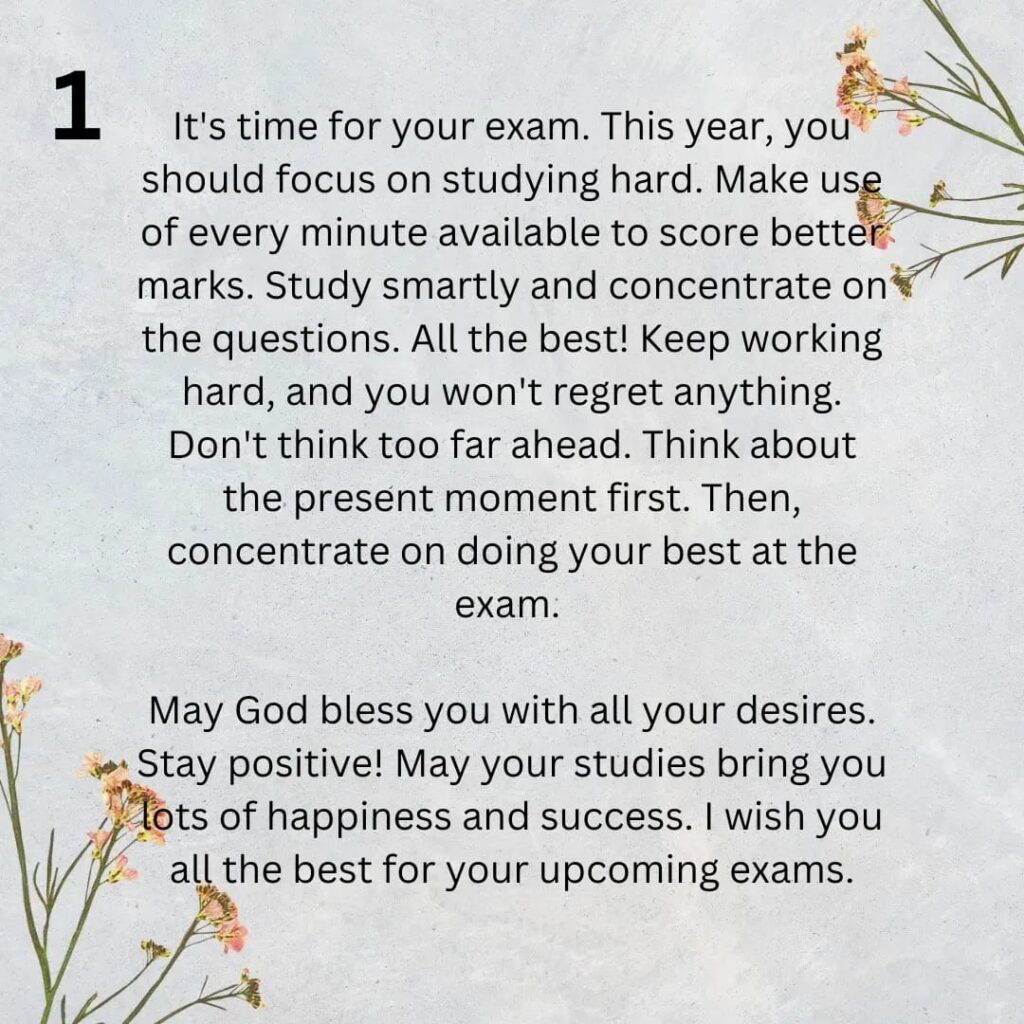
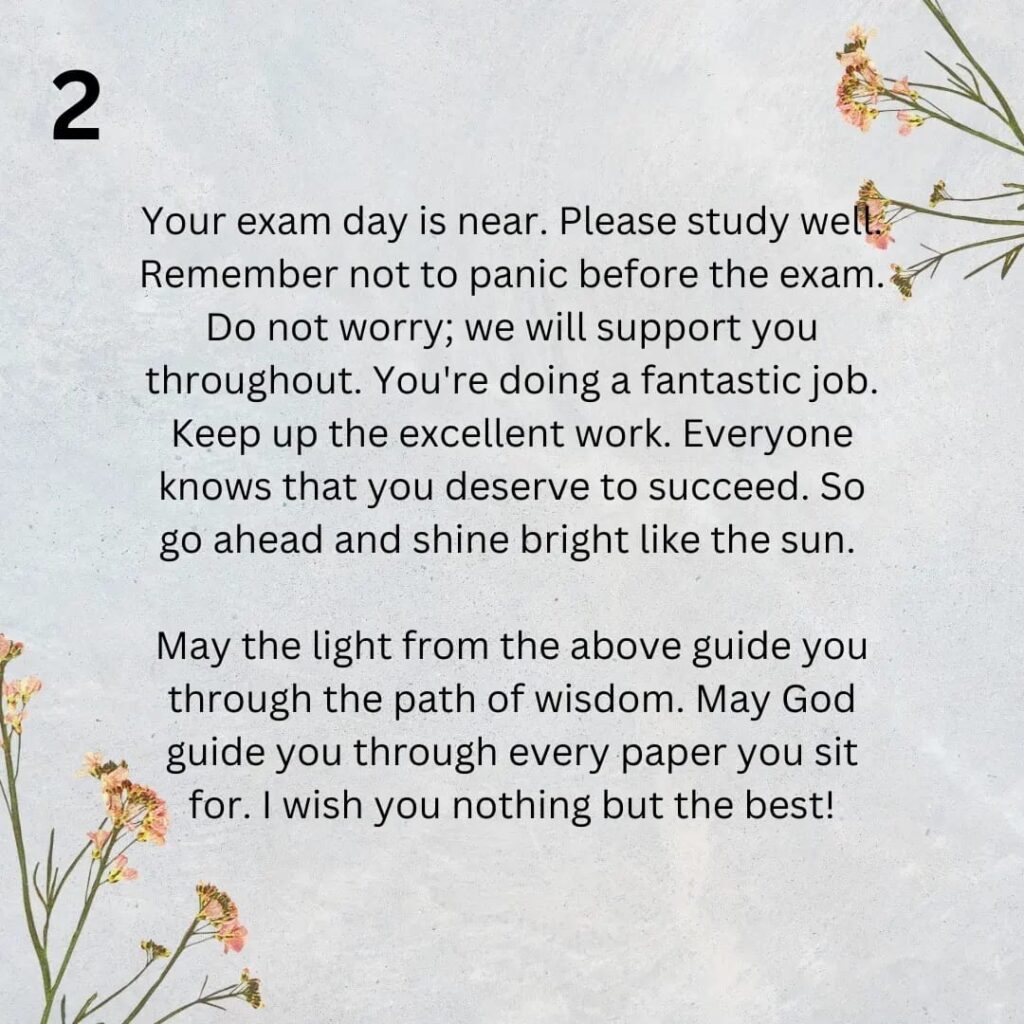
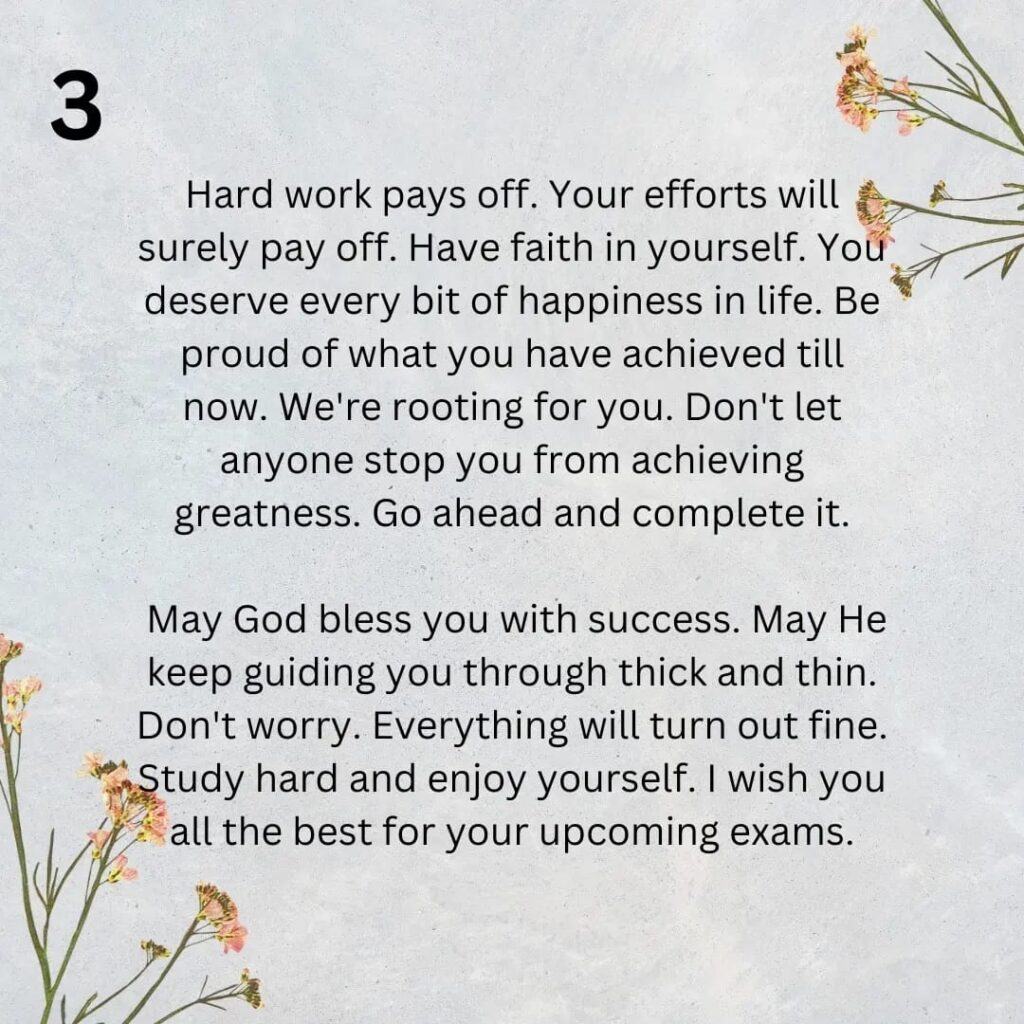
From the first day of Standard One, I knew you had a bright future ahead. I’ve watched you chase your goals with courage, even when the work felt tough. You’ve made me proud every single day. Remember to breathe, read carefully, and trust yourself, you’ve done the work. No matter the results, you will always be my shining star. Now go and conquer those papers like the champ you are! May God guide your thoughts, calm your nerves, and remind you that you are more than your grades.
Love you endlessly,
Mum (and your secret stash of chocolate is waiting!)
FAQ
Q: Can I write a success card message in Kiswahili or my local language?
A: Absolutely! It makes it even more personal. Just ensure your child understands every word.
Q: Should I include quotes or Bible verses?
A: If it’s something meaningful to both of you, yes. Just keep it short so it complements, not overshadows, your personal words.
Q: Can I send a success card by email or WhatsApp instead?
A: You can, but physical cards have a lasting effect. Your child can keep it as a tangible reminder of your love.
Sample Short Success Card Message Ideas for Your Child
- My dear son, this is just one step in your beautiful journey. I believe in you.
- You’ve worked so hard and I know you’ll give your best. Go conquer!
- Even in moments of doubt, remember, your effort is already a victory.
- Shine bright, my girl. You were made for great things.
- I’ll be cheering for you from the first minute to the last.
Final Tips for How to Write a Success Card for Your Child
- Be short and sweet: Two to four heartfelt sentences are enough.
- Make it about them: Use their name, hobbies, or shared experiences.
- Avoid scary language: Replace “Don’t fail” with “Do your best.”
- Write from the heart: Even if it’s not perfect grammar, sincerity wins.
Conclusion
Writing a success card message for your child doesn’t have to feel intimidating. It’s about speaking from the heart, showing you believe in them, and adding those little touches that make your words truly theirs. In years to come, they might not remember every exam question, but they’ll remember the words you sent with love.


